EN
EN

How to Install & Maintain Rubber Seals & Gaskets: Avoid Early Failure & Extend Lifespan
2026/07/15
Learn how to install and maintain rubber seals and gaskets to avoid failure and extend their lifespan.
Factory operators, maintenance engineers and product designers frequently encounter premature breakdown of rubber components. Many assume defective manufacturing is to blame, while in most situations, failures stem from improper material selection, unsuitable working environment or incorrect installation.
This troubleshooting guide covers the four most widespread rubber failure modes: cracking, swelling, hardening and leakage. We break down underlying causes and actionable solutions to help you reduce part replacement frequency and avoid unexpected equipment downtime.
Visible cracks on gaskets, O-rings and vibration mounts belong to one of the most searched rubber issues: why does rubber crack prematurely. Two primary crack types occur in industrial applications.
Symptoms: Fine surface fissures, cracks grow longer under repeated bending; commonly seen on outdoor rubber exposed to sunlight. Root Causes: Ozone in air attacks unsaturated rubber molecular chains. NR, NBR lack sufficient ozone resistance without special formulation. Long-term UV exposure accelerates surface ageing. Solutions:
· Switch to ozone-resistant grades: EPDM, CR or specially compounded rubber
· Add anti-ozonant additives during mixing if material cannot be replaced
· Prevent continuous stretching of rubber parts placed outdoors
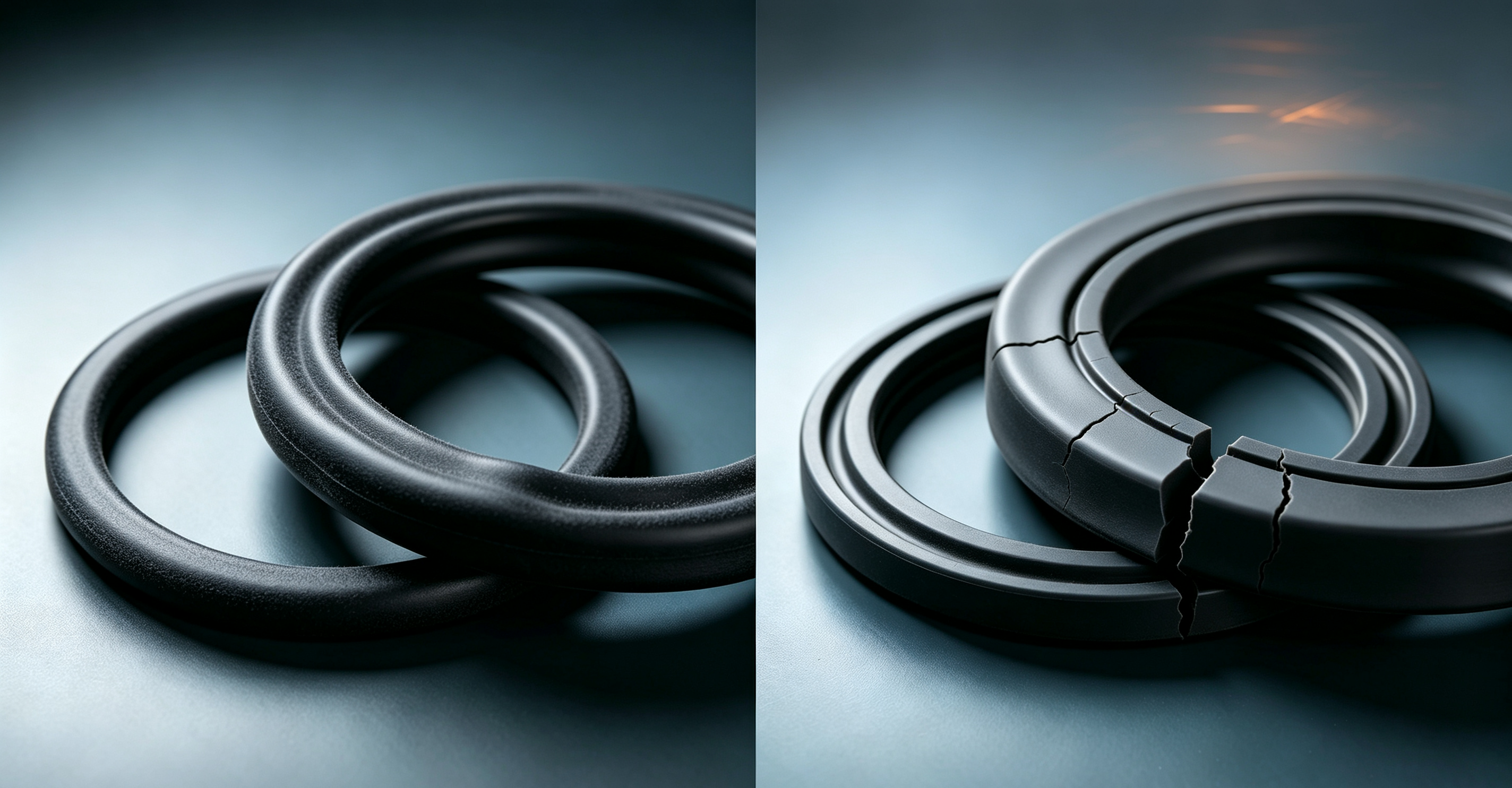
Symptoms: Cracks appear at stress concentration areas after repeated squeezing, movement or vibration. Root Causes: Continuous cyclic load, sharp edges causing local stress, insufficient tear resistance of selected elastomer. Solutions:
· Optimize part design to remove sharp corners
· Choose rubber with superior tear resistance
· Adjust hardness to match dynamic working loads
Symptoms: Parts expand, turn soft, lose dimensional accuracy, cannot fit grooves properly. Swelling often leads to seal extrusion and leakage. Root Causes: The most typical trigger is chemical incompatibility. When rubber contacts oil, solvent or chemical liquid, media penetrates polymer structure and causes volume expansion. A typical mistake is installing EPDM seals inside hydraulic oil circuits. Solutions:
· Verify chemical compatibility before finalizing rubber material
· Replace with media-resistant elastomers: Use NBR/FKM for petroleum oil environment
· Carry out immersion testing for new working media before mass application
Symptoms: Rubber gradually loses elasticity, becomes rigid and brittle; slight impact leads to breakage. Root Causes: Thermal ageing is the leading factor. Long-term exposure above continuous temperature limit triggers post-vulcanization. Oxidation also destroys plasticizers inside rubber compound over years of service. Solutions:
· Select rubber rated for your sustained operating temperature
· Avoid placing rubber components close to heat sources without cooling
· Specify anti-ageing formulations for long-service-cycle equipment
Leakage seldom comes from a single factor. It usually happens combined with swelling, hardening or compression set.
Compression Set Failure
Symptoms: Seals cannot rebound after long compression; permanent deformation creates gaps for fluid to escape. Root Causes: Excessive working temperature, improper rubber hardness, low-quality raw compound. Solutions:
· Choose materials with low compression set (FKM, premium HNBR) for static sealing
· Avoid over-tightening during installation
· Control continuous operating temperature within material specification
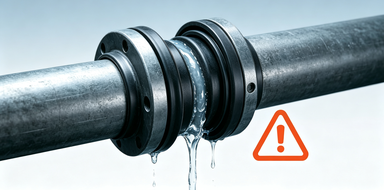
Symptoms: Instant leakage after part assembly; small nicks on sealing lip. Root Causes: Sharp thread without chamfer, rough installation tools, oversized or undersized gland dimensions. Solutions:
· Use assembly lubricant compatible with rubber
· Optimize gland drawing according to elastomer supplier recommendations
Apart from the four main issues above, these hidden factors easily get overlooked:
1. Incorrect Shore A Hardness: Too soft leads to extrusion; overly hard material lacks sealing flexibility
2. Improper Storage: Rubber stored under direct sunlight or stretched for months will degrade before installation
3. Inadequate Vulcanization: Under-cured rubber has poor physical performance; over-cured material turns brittle
Effective rubber component management relies on early prevention rather than emergency replacement.
· Confirm temperature, contact media and environment before material selection
· Standardize installation procedure to eliminate assembly damage
· Arrange periodic inspection for critical sealing parts
· Follow professional storage rules for spare rubber stocks
Cracks, swelling, hardening and leaking do not always mean low-quality rubber goods. In most instances, the problem lies in mismatch between material properties and field operating conditions. If you struggle to identify the root cause of your rubber part failures, send us detailed working parameters, failure photos and medium information. Our technical team can analyze problems and recommend suitable custom molded rubber solutions for your equipment.
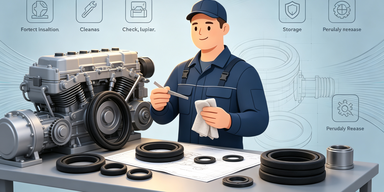
2026/07/15
Learn how to install and maintain rubber seals and gaskets to avoid failure and extend their lifespan.
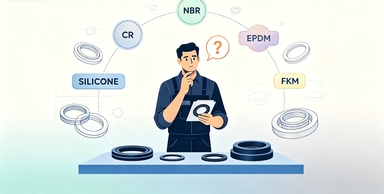
2026/07/15
Explore common rubber types and learn how to select the perfect rubber for your application with Maihua Rubber.